
Sharks in Cozumel, Mexico

Exploring the Underwater Marvels: Sharks of Cozumel
Cozumel, with its crystal-clear and warm waters, is a diver’s paradise. Nestled in the heart of the Mesoamerican Barrier Reef, the second-largest reef system on our planet, this Mexican island offers a breathtaking underwater world. Among the fascinating marine creatures that call Cozumel home, sharks take center stage. Let’s dive into the depths and explore the sharks you might encounter while scuba diving in Cozumel.
1. Nurse Shark (Ginglymostoma cirratum)
Description: The nurse shark, with its sandy-colored skin and docile demeanor, is a common sight in Cozumel. It reaches lengths of up to 9 feet and weighs around 200 pounds. During the day, you’ll find them resting on sandy bottoms or tucked into crevices.
Diet: Nurse sharks feast on crustaceans, mollusks, tunicates, sea snakes, and other fish, including stingrays. They’re harmless to divers and prefer a leisurely lifestyle.

Nurse Shark
2. Caribbean Reef Sharks (Carcharhinus perezi)
Appearance: These sleek, gray sharks boast a streamlined body and striking white-tipped dorsal fins. Their inquisitive eyes and powerful presence make encounters memorable.
Habitat: While not as common as some other species, Caribbean Reef Sharks occasionally visit dive sites near Palancar and Cedral Wall. Keep your eyes peeled for their elegant movements along the reef.
Behavior: These sharks are generally shy and prefer to observe divers from a distance. They feed on fish, rays, and crustaceans, making them an essential part of Cozumel’s ecosystem.
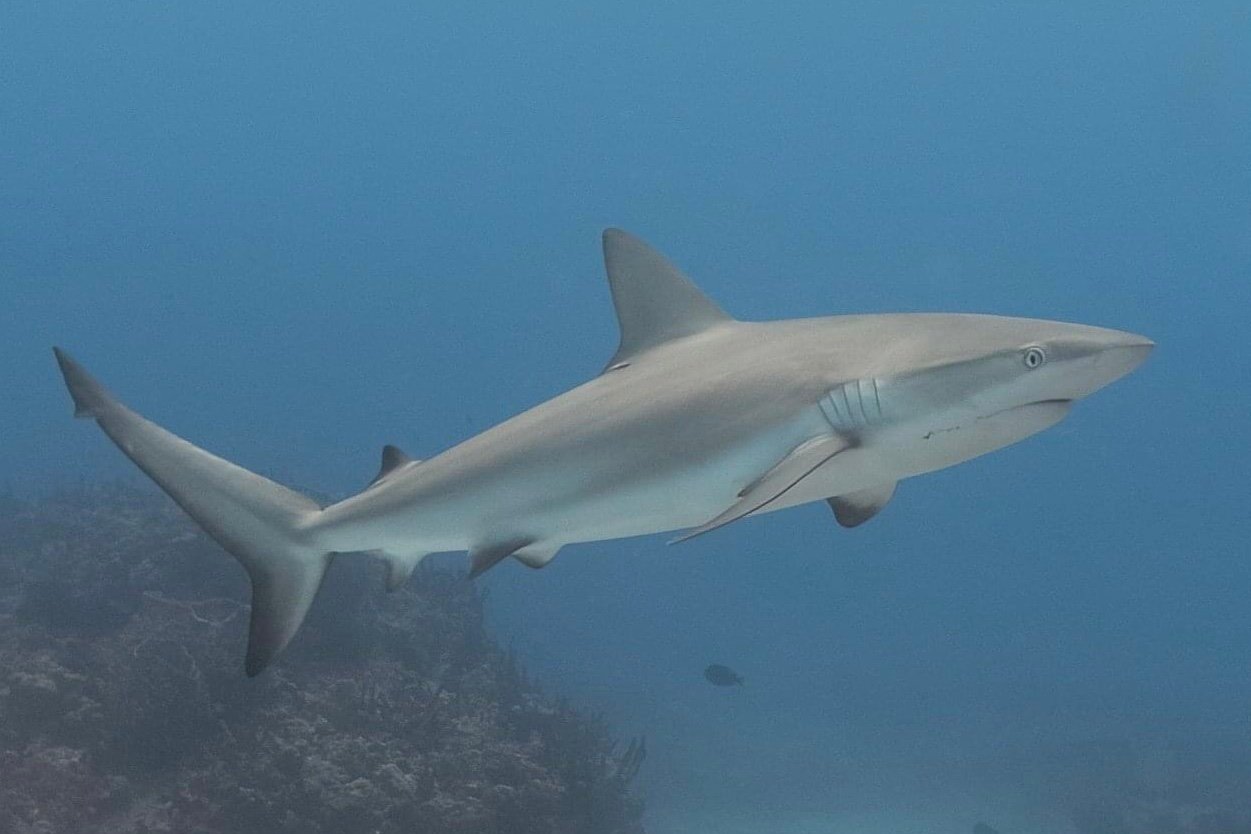
Caribbean Reef Shark
3. Tiger Sharks (Galeocerdo cuvier)
Description: A recent rare Tiger Shark sighting in Cozumel, Mexico is an exciting reminder that the island’s waters can still surprise even veteran divers. Tiger Shark are uncommon visitors around Cozumel, making any encounter a truly special moment. These large, powerful sharks are known for their bold striped markings when young, which fade as they mature.
Where to Spot Them: Tiger Sharks are more likely to be seen in deeper offshore water, along drop-offs, channels, and outer reef edges rather than on the shallow coral reefs. In Cozumel, sightings are rare and unpredictable, often happening in blue water near deeper southern or eastern areas of the island.
Temperament: Tiger Sharks are curious apex predators and deserve respect, but they are not mindless attackers. Like most sharks, they generally avoid humans and are more interested in their natural environment than divers. Calm behavior, proper distance, and observing without chasing always make for the best encounter.
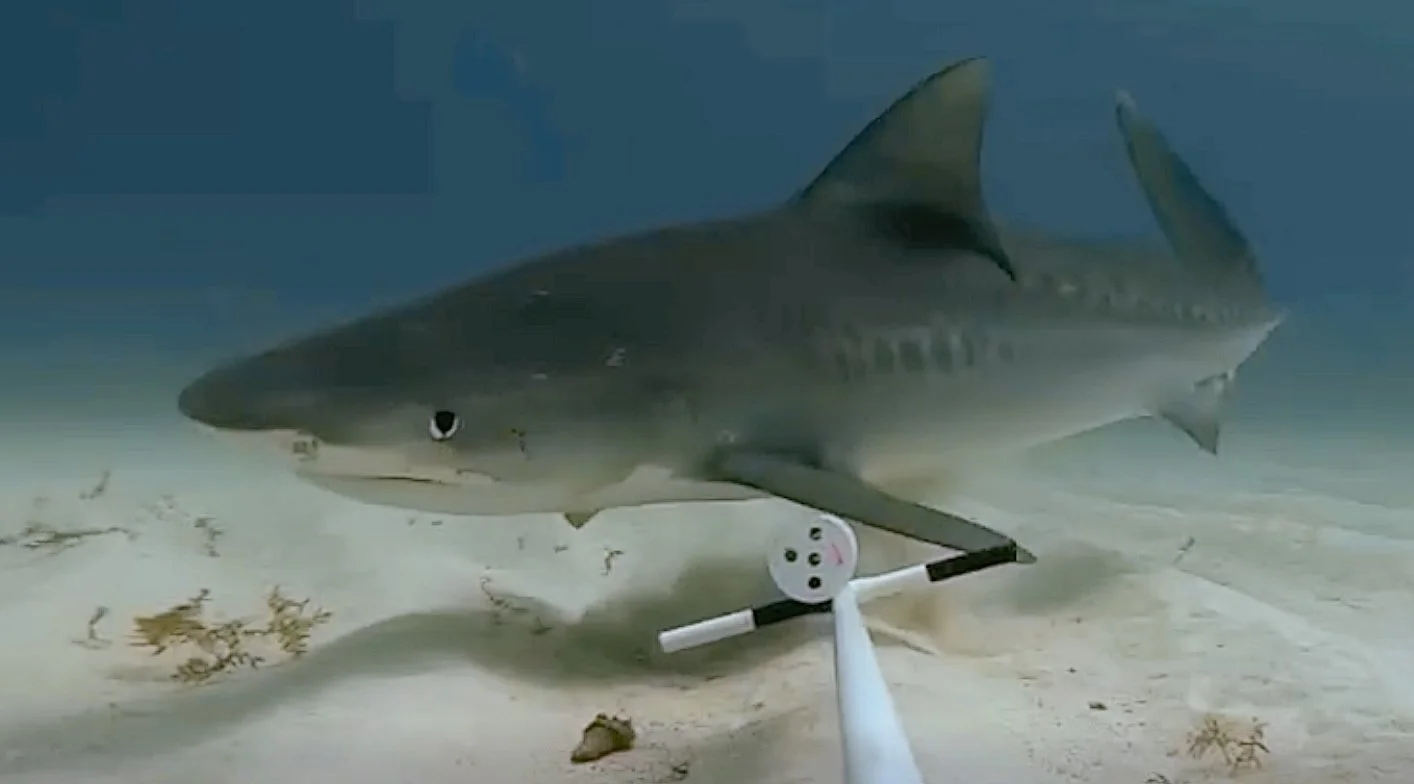
Cozumel Tiger Shark
4. Hammerhead Shark (Sphyrna spp.)
Description: The hammerhead shark’s distinctive head shape sets it apart. While not as common as nurse sharks, they occasionally grace Cozumel’s dive sites. Their unique cephalofoil allows them to detect prey more effectively.
Behavior: Hammerheads in Cozumel are a rare sight but have been more frequent the past few years. Often swimming alone over the sandy edge of the reefs. Keep your eyes peeled for these elusive creatures.
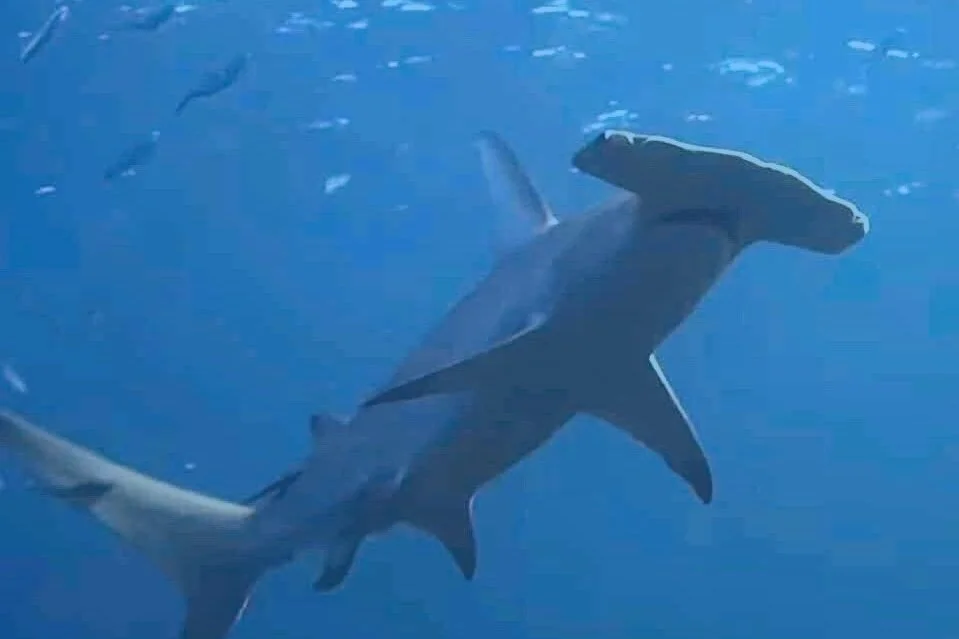
Hammerhead Shark
5. Bull Shark (Carcharhinus leucas)
Rare Residents: Bull sharks are infrequent visitors to Cozumel’s waters. Unlike their more common counterparts, they prefer nearby locales such as Playa del Carmen.
Seasonal Sightings: From December to February, these robust sharks occasionally grace the depths. Their stocky build and powerful presence demand respect.
Adaptability: Bull sharks thrive in both saltwater and freshwater environments. Their reputation as aggressive hunters stems from their indiscriminate diet, which includes everything from fish to tin cans.
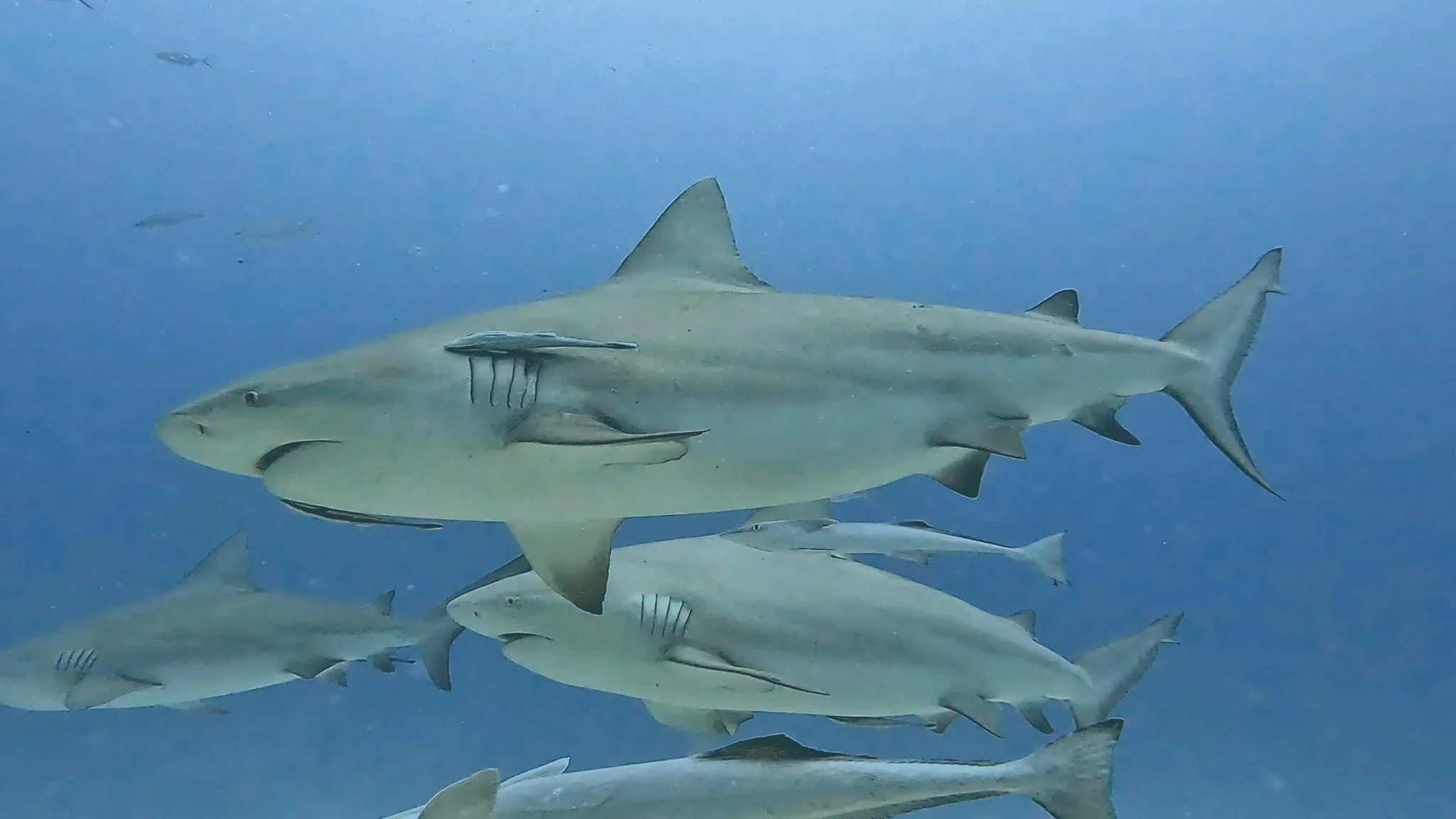
Bull Sharks
6. Whale Shark (Rhincodon typus)
Description: The whale shark is one of the ocean’s gentle giants. With its humped and ridged back, it can reach lengths of up to 60 feet (though the average is around 40 feet). Its large, flat head and curious nature make it a thrilling sight for divers.
Habitat: While whale sharks prefer open waters during their migrations, lucky divers in Cozumel sometimes encounter them near coral reefs. During the summer months Whale Sharks migrate to the waters near Cancun. These filter feeders dine exclusively on small fish and plankton, posing no threat to humans.
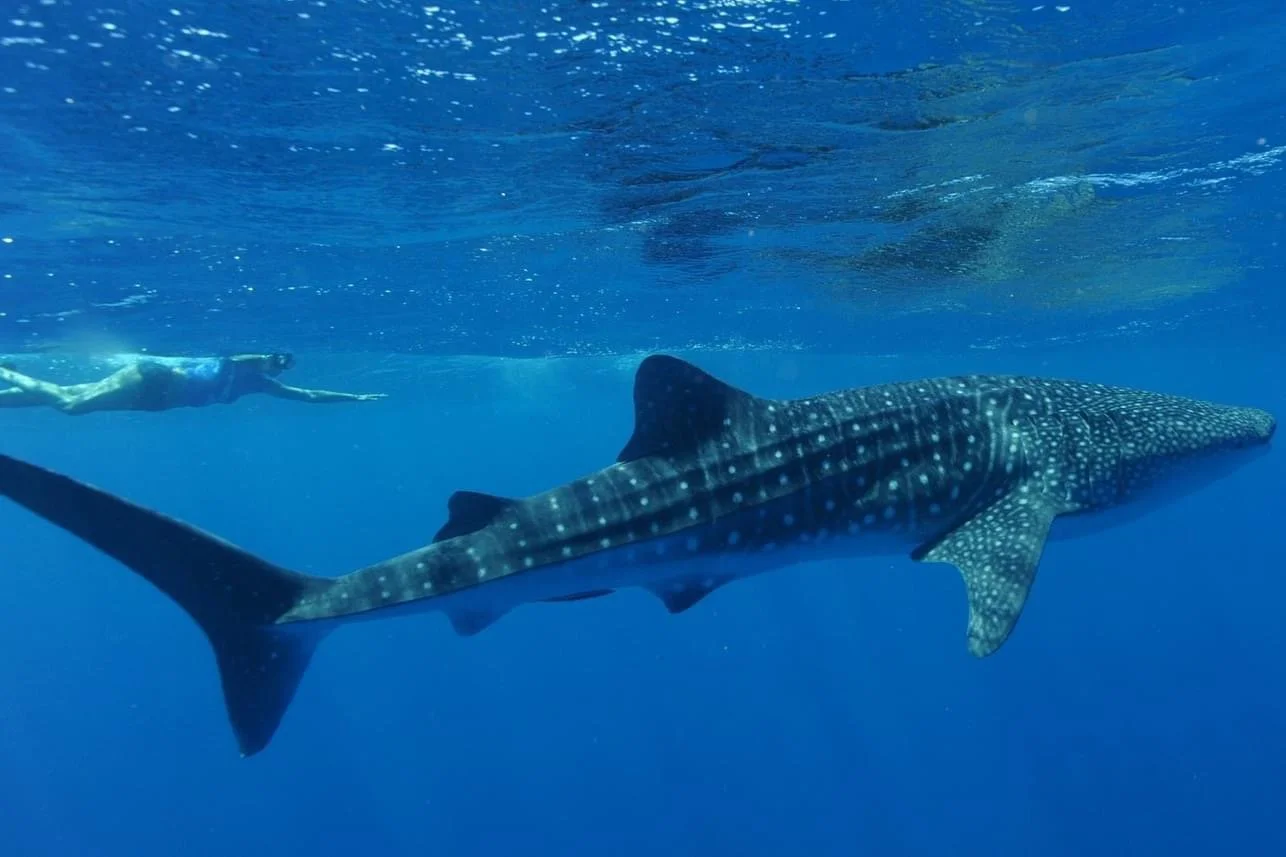
Whale Shark
Written by Doug Atkinson
Owner, Blue Note Scuba
20+ years diving Cozumel